
Most meal plans are written on a Sunday by someone with more energy than the person who has to follow them on Wednesday. Seven dinners, each one different, each one needing something fresh. By Thursday two of them have turned into toast, and a bag of spinach is quietly giving up in the bottom drawer.
The plan was not wrong about the food. It was wrong about the week.
Plan fewer nights than you have
Four planned dinners is usually enough for a seven-night week. The other three take care of themselves: a night out, a night of leftovers, a night when someone gets home late and eggs are the only reasonable answer. Planning those nights as well means buying food for meals that never happen.
Four also leaves the plan loose enough to move. If Tuesday falls apart, Tuesday’s dinner becomes Wednesday’s, and nothing goes off in the meantime.
Put the perishable meals first
Order matters more than it looks. The dish with fish, soft herbs or salad leaves goes early in the week, while they are still at their best. The one built on a tin of beans, a squash or a bag of lentils goes at the end, because it will wait patiently if the week slips.
A quick test: if a meal could move to next week without anything spoiling, it belongs on Thursday or Friday, not Monday.
Cook once, eat twice
At least one of the four should be something that is just as good the next day: a stew, a tray of roasted vegetables, a big pot of dal. Plan it for more people than you are feeding and you have filled one of the empty nights in advance. That is not a leftover. That is the plan working.
In Flavor Folio, each planned meal keeps its own serving count, so you can plan a curry for six on Sunday without changing the recipe you saved for four.
Shop from the plan, not from memory
The shopping list is where a plan either pays off or quietly stops mattering. Written from memory, it misses the ingredient two recipes share and buys the onions twice. Built from the plan, it can add things up properly.
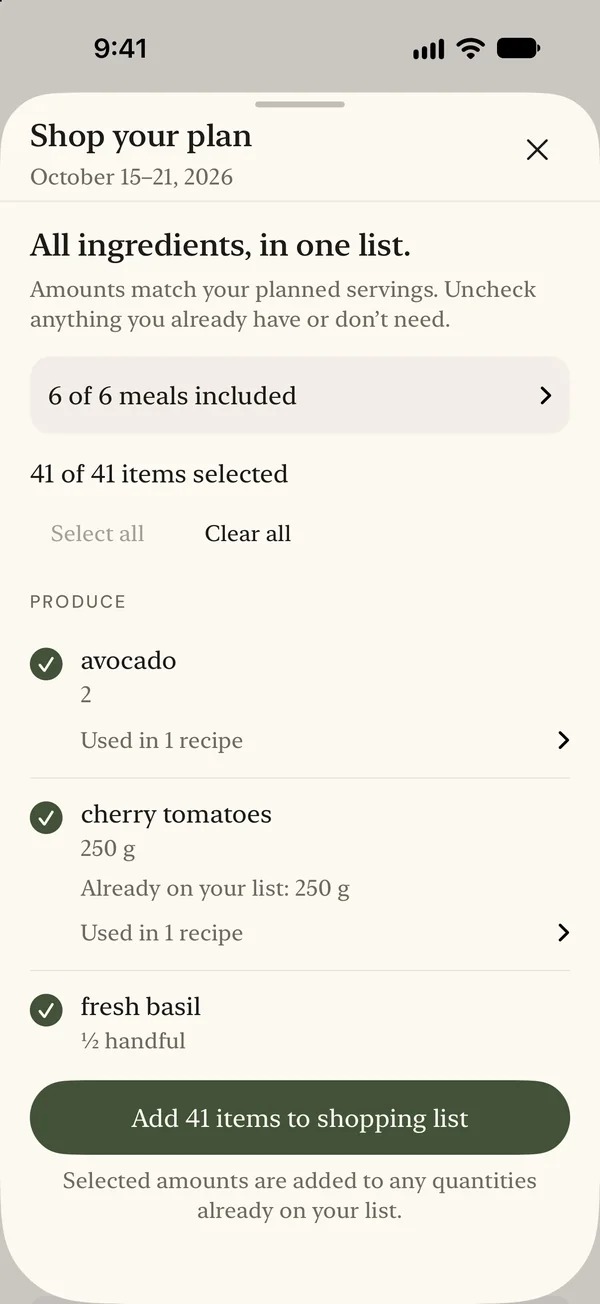
Shop this week on the Plan tab gathers the ingredients from the seven days on screen and combines amounts that repeat across recipes. Leave out a meal you might skip, or anything already in the cupboard. Nothing is added to your shopping list until you confirm it. Decide, plan and shop shows how the pieces fit together.
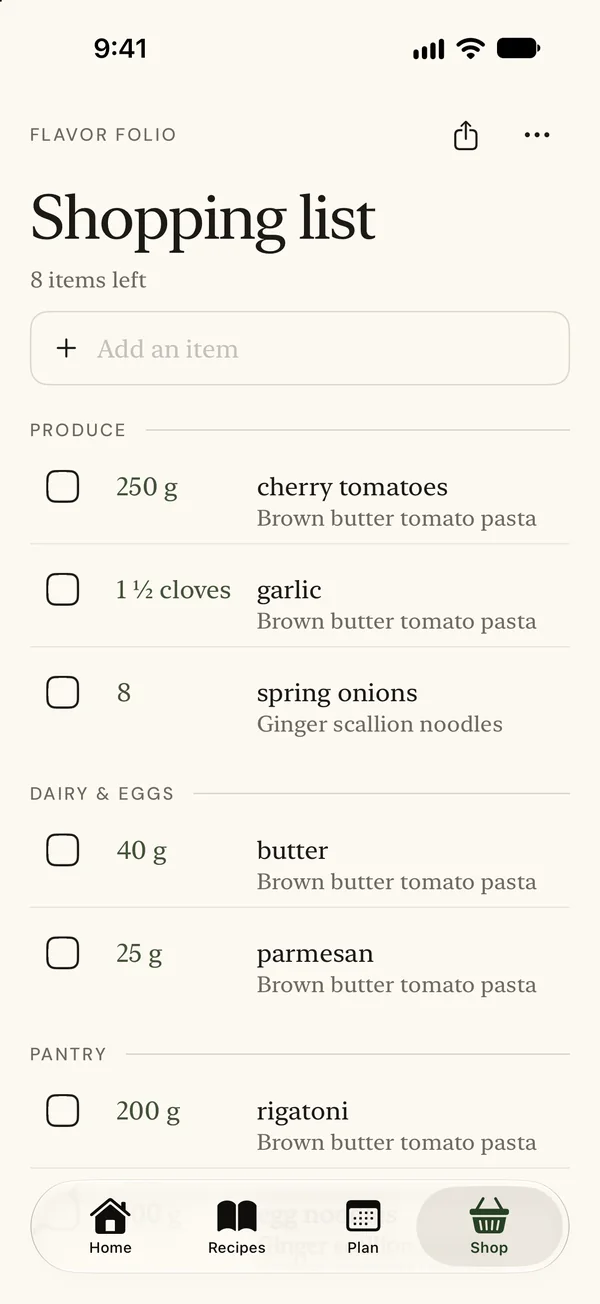
The list groups what is left by store section, so the trip goes aisle by aisle instead of back and forth for the thing you walked past.
Leave the gaps empty
The unplanned nights are not a failure of planning. They are where the cupboard does its work: the half courgette, the last two eggs, whatever needs eating before the weekend. Cooking from what is already in the cupboard is about exactly those nights.
If the four planned dinners need a starting point, the recipes are a good place to find one.
Plan four. Shop once. Let the rest of the week be what it is.